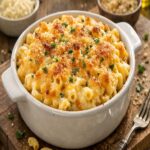
Baked Mac N Cheese Recipe
Whether you're following keto, vegan, or gluten-free eating patterns, you don't have to miss out on this soul-warming baked mac n cheese. I've spent years in my kitchen adapting the recipes my mother taught me, and I'm thrilled to share how you can enjoy this classic comfort food no matter your dietary needs. Let me walk you through each version so you can make memories around the table just like I do.
Servings 6
Calories 395kcal
Ingredients
- 3 tablespoon all-purpose flour or thickening agent see substitutions below
- 1 cup sharp cheddar cheese, finely shredded the sharper the cheese, the bolder the flavor
- 1½ cup elbow macaroni or small pasta shells choose your dietary-appropriate version below
- ½ teaspoon sea salt adjust to taste, as cheeses vary in saltiness
- ½ teaspoon smoked paprika optional but adds wonderful depth
- 1 cup Swiss cheese, finely shredded adds nutty depth and helps the sauce stay silky
- ¼ teaspoon freshly ground black pepper freshly ground tastes brighter than pre-ground
- 3 tablespoon butter or butter alternative unsalted works best for controlling salt
- ¼ teaspoon ground mustard powder enhances the cheese flavor without tasting like mustard
- 2 cup whole milk or milk alternative full-fat creates the creamiest sauce
Instructions
Step 1: Preheat Your Oven and Start Your Pasta Water
- Turn your oven to 350 degrees Fahrenheit. While it heats, fill a large pot with water—about 3 quarts—and add a generous pinch of salt. You want the water to taste like seawater. Bring it to a rolling boil over high heat. For all dietary versions: The water and salt are the same. Salt in the cooking water seasons the pasta from the inside, which is how my mom taught me to build real flavor.
Step 2: Cook the Pasta Until Just Shy of Done
- Once the water boils vigorously, add your pasta. For standard, vegan, and dairy-free versions, cook regular pasta about 1 minute less than the package directions—you want it al dente, still with just a hint of firmness when you bite it. For keto versions: Cauliflower pasta cooks much faster than regular pasta—usually 4 to 5 minutes. Shirataki noodles need just 2 to 3 minutes. Read your package and subtract 1 minute. For gluten-free versions: Most gluten-free pasta is more delicate. Cook it about 1 minute less than directed, as it continues softening in the oven. Drain in a colander but do not rinse. The starch clinging to the pasta helps the sauce cling beautifully.
Step 3: Create Your Roux Base
- While your pasta cooks, melt your butter in a large skillet or heavy-bottomed pot over medium heat. Once melted and foaming slightly, add your flour (or flour alternative based on your dietary needs). Whisk constantly for 1 to 2 minutes until the mixture is light golden brown and smells toasty and pleasant. This cooking time is crucial—it removes the raw flour taste while creating the base that will thicken your sauce. For keto versions using almond flour: Use only 2 tablespoons and watch carefully, as almond flour browns faster than wheat flour. Whisk for about 1 minute. For gluten-free versions: Rice flour or cornstarch may brown slightly faster. The mixture should smell nutty, not burnt.
Step 4: Add Your Milk and Create the Sauce
- Slowly pour in your milk or milk alternative while whisking constantly. This prevents lumps from forming. Keep whisking until the mixture is completely smooth—no floury bits hiding at the bottom of the pot. For keto versions using heavy cream and broth: Use 1 cup heavy cream and 1 cup unsalted chicken or vegetable broth. Whisk the same way. For vegan versions using cashew cream: If your cashew cream is very thick, add it slowly while whisking. Thin it slightly with the cooking water from your pasta if needed. Add your salt and pepper now. Taste a small spoon of sauce—it should taste slightly salty, as the cheese will add more.
Step 5: Bring the Sauce to a Gentle Bubble
- Increase heat to medium-high and whisk frequently. After about 5 to 7 minutes, the sauce will begin to thicken and small bubbles will start breaking the surface. This is exactly when you know it's ready for the cheese. Expert's Nutritional Tip: The starch in your flour or cornstarch swells as it heats, thickening the sauce. This is why proper whisking and heat are non-negotiable—you can't rush this step. But you also don't want to overcook it, as the sauce will become gluey. Watch for those first gentle bubbles and you'll know you're at the perfect moment. Remove from heat immediately once bubbling begins.
Step 6: Stir in Your Cheese Until Silky and Smooth
- Add your shredded cheese to the hot sauce along with the paprika and mustard powder. Whisk constantly until every bit of cheese has melted and the sauce is completely smooth and glossy. For vegan versions: Add ½ cup nutritional yeast along with your cashew-based cheese. The nutritional yeast adds a savory, umami depth that mimics the complexity of dairy cheese. For dairy-free versions: Add your dairy-free cheese alternatives. These often melt more slowly, so be patient with your whisking. The sauce might look a bit grainy at first, but keep whisking and it will smooth out. The sauce should be silky and coat the back of a spoon. If it seems too thin, you can whisk in 1 more tablespoon of cornstarch mixed with 2 tablespoons cold milk, but this rarely needs to happen if you've followed the steps.
Step 7: Combine Pasta and Sauce
- Pour your drained pasta into the cheese sauce and stir gently but thoroughly until every piece of pasta is coated. The mixture should look creamy and luscious, not dry. If your sauce seems too thick after mixing (this can happen with gluten-free pasta especially), add milk a tablespoon at a time until it reaches that creamy consistency you're after. Remember, the pasta will absorb some liquid as it bakes.
Step 8: Transfer to Your Baking Dish
- Lightly grease a 2-quart baking dish (an 8x8-inch square dish works perfectly) with butter or oil. Pour in your mac and cheese mixture and spread it into an even layer. You can cover the dish with foil and refrigerate at this point for up to 24 hours. If baking straight from the refrigerator, add 10 to 15 minutes to your baking time.
Step 9: Bake Until Golden and Bubbling
- Place the dish in your preheated 350-degree oven. Bake uncovered for 20 to 25 minutes until the top is golden brown and the edges are bubbling vigorously. The bubbling at the edges tells you the entire dish is hot throughout. For a quicker golden top: After 15 minutes of baking, turn your broiler on high. Watch closely—broilers can brown things very quickly. You want golden, not charred. This takes 2 to 4 minutes usually. Alternatively, if you'd prefer to skip baking and want the creamiest possible result, simply transfer your completed mac and cheese to a serving dish. The cheese is already melted and the pasta is cooked, so this fully cooked version works beautifully and serves immediately. Let the baked version rest for 5 minutes before serving. This allows the sauce to set slightly and makes serving cleaner.