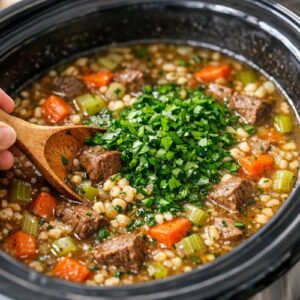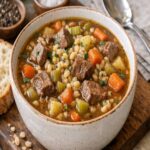
Beef Barley Soup Slow Cooker Recipe
Before you throw those leftovers away, turn them into something even better. This Beef Barley Soup Slow Cooker Recipe was born from exactly that moment—the one where I opened my refrigerator and found a half-eaten roast staring back at me. I could toss it. Or I could transform it. That afternoon, I created a soup so warming and nourishing that my family asked for it by name all winter long. Just like my mother taught me in her kitchen, the most memorable meals often come from resourcefulness and love blended together. Whether you're starting with leftover beef or building from scratch, I'm going to show you how to make magic in your slow cooker.
Servings 6
Calories 392kcal
Ingredients
- 2 tablespoon olive oil for searing the meat and building flavor
- 4 clove fresh garlic (minced finely
- 6 cup beef broth or a combination of beef broth and water homemade is always superior
- 2 teaspoon balsamic vinegar optional, but it rounds out flavors beautifully
- 2 pound beef chuck roast or leftover cooked beef trimmed of excess fat, cut into 1-inch pieces
- ½ teaspoon freshly ground black pepper grind it fresh, it tastes entirely different
- 3 medium carrots peeled and diced to match the onion size
- 2 sprig fresh thyme or 1 teaspoon dried thyme if fresh isn't available
- ¼ cup fresh parsley minced, added at the very end to preserve its bright flavor
- 1 bay leaf (remove before serving
- 1 cup pearl barley rinsed thoroughly to remove surface starch
- 2 stalk celery diced, including any pale inner leaves
- 2 tablespoon tomato paste adds complexity and natural sweetness
- 1 teaspoon kosher salt plus more for seasoning at the end
- 1 tablespoon Worcestershire sauce the foundation of deep flavor
- 1 medium yellow onion diced into ¼-inch pieces for even cooking
Instructions
Step 1: Revive Your Beef With a Quick Sear
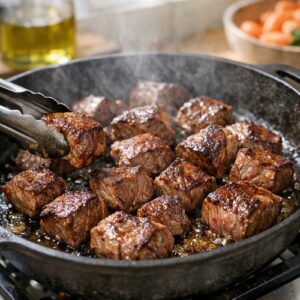
- If your beef is cold from the refrigerator, let it sit at room temperature for 15 minutes. This ensures even browning and better flavor development. Trim any excess fat—you want flavorful fat, not greasy fat. Cut the beef into 1-inch pieces so each one has maximum surface area for browning. Season your meat generously with salt and black pepper on all sides. Don't be shy here. This is your only chance to season the meat before it goes into liquid. Heat 2 tablespoons of olive oil in a large cast-iron skillet over medium-high heat until you see it shimmer and smell its nutty aroma. Working in batches so you never overcrowd the pan, sear the beef for 1 to 2 minutes per side until a golden crust forms. You're not cooking the meat through—you're building flavor. If you have the pan drippings from your original roast, add those to your slow cooker now. If you have bones from that roast, add them too. They'll release collagen that makes this soup silky.
Step 2: Build Your Flavor Base With Vegetables
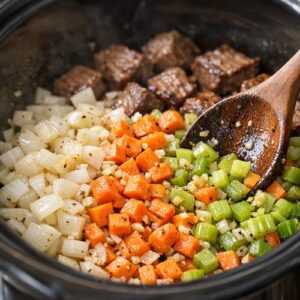
- Transfer your seared beef to your slow cooker. Now comes the aromatic layer that makes people say, "Something smells amazing." Dice your onion, carrots, and celery into even ¼-inch pieces. This isn't about perfection—it's about even cooking so everything finishes tender at the same time. Add all three vegetables and your minced garlic directly to the slow cooker with the beef. Stir everything together so the vegetables are distributed evenly. At this point, you're not cooking anything yet—you're assembling. But I promise you, when you lift that lid in a few hours, the transformation will astound you.
Step 3: Create Your Broth Foundation
- Pour in 6 cups of beef broth. If you don't have quite enough broth, you can make up the difference with water, but I prefer all broth when possible. Now add 1 tablespoon of Worcestershire sauce and 2 tablespoons of tomato paste. Stir thoroughly until the tomato paste is completely dissolved. This is important because tomato paste that clumps will create pockets of intense flavor rather than even seasoning throughout. The Worcestershire brings savory depth without tasting "saucy." The tomato paste adds natural sweetness and acidity that balances the richness of the beef. Together, they create a foundation that tastes like someone spent all day building this soup.
Step 4: Add the Grain and Herbs
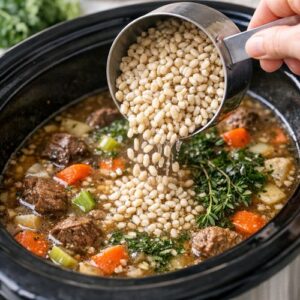
- Rinse your pearl barley under cool water for 30 seconds. This removes surface starch that could make your soup cloudy. Add the rinsed barley directly to the slow cooker. Now add your 2 sprigs of fresh thyme (or 1 teaspoon dried) and 1 bay leaf. Add 1 teaspoon of kosher salt. Stir everything one final time, making sure the barley is submerged and nothing is stuck to the bottom. This is your last chance to check that everything is evenly distributed. Close the lid and set your slow cooker accordingly.
Step 5: Cook Low and Slow (The Actual Magic)
- Here's where patience becomes your secret ingredient. Cover your slow cooker and cook on high for 3½ to 4 hours, or on low for 7½ to 8 hours. I prefer low and slow because it allows flavors to develop more gently and completely. The meat will become increasingly tender. The barley will soften from grain to something almost creamy. The broth will deepen in color and richness. You don't need to stir. You don't need to check. This is the beauty of slow cooking—you can set it in the morning before work and come home to a house that smells like a warm embrace. If you're cooking on high, check at the 3-hour mark. If the barley is tender and the beef is easily shredded with a spoon, you're done. If it needs more time, give it another 30 minutes.
Step 6: Finish With Fresh Herbs and Final Seasoning
- When your timer goes off, carefully remove the bay leaf and thyme sprigs. Discard them. Stir in your ¼ cup of fresh minced parsley. Fresh herbs added at the end keep their bright flavor and color—this is the finishing touch that says "I care about this meal." Taste your soup. Really taste it. Now is when you adjust the seasoning with additional salt and black pepper. You might need ¼ teaspoon more salt, or you might need a pinch of sugar if the tomato is too acidic. Some people add ½ teaspoon of balsamic vinegar here—it rounds out flavors in a way that's hard to describe but impossible to miss once you taste it. Ladle into bowls and serve immediately. Watch people's faces as they taste this. They'll taste the care. They'll taste the transformation. That's what this is really about.