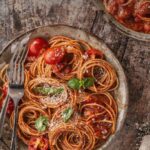
Bucatini Amatriciana - Hearty Food Ideas
Imagine walking through the narrow cobblestone streets of a quaint Italian village, the aroma of sizzling guanciale wafting through the air. Nothing quite screams comfort food like a plate of bucatini amatriciana.
Servings 6
Calories 600kcal
Ingredients
- 3 cans San Marzano whole or cherry tomatoes 14 ounces each
- 1 pound bucatini pasta
- 1/4 cup diced guanciale, pancetta, or unsmoked bacon
- 2 fresh rosemary sprigs
- 1/2 teaspoon crushed red chili flakes
- 1 small shallot, finely minced
- 1 tablespoon extra virgin olive oil
- Freshly ground black pepper, to taste
- 1/4 cup finely grated Pecorino Romano cheese
Instructions
Step 1: Boil the Pasta
- Start by filling a large pot with water. Bring it to a rolling boil. Make sure to salt it generously—like the sea! Toss in your bucatini and cook it until it's al dente, which should take about 9 to 11 minutes, depending on the package instructions. Reserve about a cup of the pasta cooking water before draining.
Step 2: Sauté the Guanciale
- While the pasta cooks, take a large skillet and heat it over medium heat. Add the diced guanciale (or pancetta). I can already hear that satisfying sizzle! Cook it until it's crispy and golden, which usually takes about 5 minutes. Don't rush this process; the key is to develop that rich flavor.
Step 3: Add Shallots and Rosemary
- Once your guanciale is nice and crispy, toss in the minced shallot. Stir it around and watch it turn translucent. This usually takes about 2 minutes. Then, throw in those fragrant rosemary sprigs and crushed red chili flakes. The aroma filling your kitchen will whisk you away to Italy!
Step 4: Incorporate the Tomatoes
- Next, pour in the San Marzano tomatoes. If you're using whole tomatoes, crush them with a spoon as they hit the skillet. Bring the sauce to a gentle simmer and let it bubble away for about 10 minutes. This step allows the flavors to meld and develop. Stir occasionally, and don’t forget to season it with freshly ground black pepper!
Step 5: Combine Pasta and Sauce
- Now, it's time to unite the pasta and sauce. Once your bucatini is cooked, drain it (remember to reserve that lovely pasta water!). Add the pasta directly to the skillet with your sauce. Toss everything together, adding a splash of reserved water if necessary to help the sauce adhere to the pasta.
Step 6: Finish with Cheese
- Finally, turn off the heat. Sprinkle the finely grated Pecorino Romano cheese over the top. Toss everything one last time until the cheese melts into the dish. Taste and adjust your seasoning if needed. You’re just about ready to serve!
Notes
- Use high-quality ingredients: Quality guanciale and San Marzano tomatoes make a significant difference in flavor.
- Don't Skip the Cheese: Pecorino Romano is traditional, but you can experiment with other cheeses.
- Leftover Pasta: If you have leftover sauce, try it with another type of pasta or as a base for a pizza.
- Adjust Heat Level: Control the chili flakes for a milder or spicier result.
- Fresh Herbs: Experiment with fresh basil for a twist!