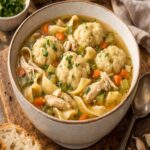
Chicken Noodle Soup With Dumplings Recipe
The classic chicken noodle soup with dumplings is pure comfort—but I know what happens when you eat a big bowl. You feel heavy, sluggish, and that post-meal energy crash sneaks up fast. I spent years watching my Saint Louis patients struggle with this exact problem. They wanted the soul-warming memories, the tender dumplings, the savory broth, but they didn't want to feel weighed down afterward. So I went back to my mother's kitchen philosophy and rebuilt this recipe from the ground up. The result? Everything you love about this dish, minus the bloat and exhaustion.
Servings 6
Calories 439kcal
Ingredients
For the Broth and Vegetables
- ½ teaspoon dried thyme or 1 teaspoon fresh thyme leaves thymol in thyme is antimicrobial and supports respiratory health
- ½ large yellow onion diced small, provides quercetin, a natural antihistamine that helps reduce inflammation
- 5-6 medium carrots sliced into half-moons, packed with beta-carotene which your body converts to vitamin A for vision and immune health
- 3 cup cooked chicken breast and thigh meat shredded, a mix of white and dark meat gives you iron from the thighs and lean protein from the breast
- 1½ cup green cabbage roughly chopped, contains sulforaphane, a compound with documented anti-inflammatory and detoxification properties
- 1½ teaspoon sea salt fine grain, you control the sodium and adjust to taste rather than relying on processed broth salt
- 2 bay leaves removed before serving, add depth without calories or sodium
- ¾ teaspoon freshly ground black pepper cracked fresh, not pre-ground, because the volatile oils activate your digestive system
- 12 cup low-sodium chicken broth 140 mg sodium per cup, letting vegetables and herbs build the flavor profile without the salt load
- 4 stalk celery chopped into bite-sized pieces, provides cellulose fiber and a subtle mineral boost that supports nerve function
For the Dumplings
- 1 cup all-purpose flour spooned and leveled, never packed, this is your dumpling base
- 3-4 tablespoon whole milk (full-fat, creates tender dumplings without excess calories
- ¼ teaspoon fine sea salt lets the subtle flavors shine without overpowering the broth
- 2 teaspoon baking powder aluminum-free, creates lift without butter or eggs, making them pillowy-light
- 2 tablespoon olive oil extra-virgin, cold-pressed, adds moisture and healthy monounsaturated fat instead of butter
- 1 large egg room temperature, beaten with a fork, binds the dough and adds richness without cream
Instructions
Step 1: Build Your Flavor Foundation
- Pour your 12 cups of low-sodium broth into a large heavy pot or Dutch oven and set it over medium-high heat. While it comes to a boil, prep your vegetables—don't rush this part. Uniform sizes matter because they cook evenly. Chop your celery into ½-inch pieces, slice your carrots on a bias (this increases surface area and helps them cook faster while looking prettier), and roughly chop your cabbage. Dice your onion small so it nearly melts into the broth. Once your broth reaches a rolling boil, add the carrots, celery, onion, and cabbage. Add your bay leaves now. Season with sea salt, pepper, and thyme. Bring it back to a boil, then immediately reduce heat to medium-low. This prevents the vegetables from becoming mushy.
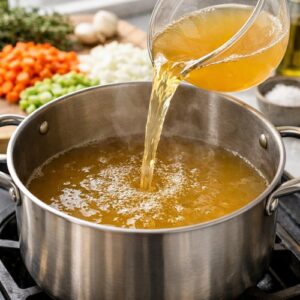
Step 2: Simmer Until the Vegetables Are Tender-Crisp
- Let the soup simmer gently for 15-20 minutes. You're looking for carrots that are fork-tender but not falling apart, and cabbage that's softened but still holds its shape. Taste the broth now—this is when you adjust seasoning. I often add another ¼ teaspoon of salt at this point because the vegetables release moisture and dilute the flavors slightly. This is your chance to make it perfect. While your vegetables simmer, prepare your dumplings. In a medium bowl, whisk together your flour, baking powder, and salt. Make a small well in the center. Crack your egg into the well, add your olive oil, and pour in your milk. Stir gently with a fork until just combined—do not overmix. Overmixed dough becomes tough because you're developing gluten. The dough should look shaggy and loose, like wet biscuit dough. That's perfect.
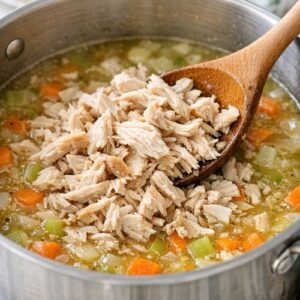
Step 3: Add Your Shredded Chicken
- Once your vegetables are tender, stir in your 3 cups of cooked, shredded chicken. Gently fold it in so it distributes evenly throughout the pot. The chicken is already cooked, so you're just heating it through. At this point, taste again and adjust seasoning if needed. The broth should taste savory and deeply satisfying, not salty.
Step 4: Drop Your Dumplings Into the Simmering Soup
- Using a spoon—I prefer a tablespoon measuring spoon because it's the perfect size—drop rounded spoonfuls of dumpling dough directly onto the surface of the simmering soup. Don't stir them in; let them sit on top. You'll fit about 12-15 dumplings depending on how generous you are with each spoonful. Drop them in slowly so they don't clump together, spacing them about an inch apart. Cover the pot immediately with a lid or foil and increase heat to medium (not high—you want a gentle simmer, not a rolling boil that breaks up your dumplings). Set a timer for 5 minutes.
Step 5: Check for Doneness and Serve
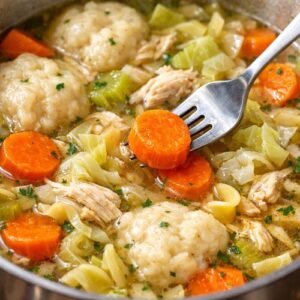
- After exactly 5 minutes, carefully remove the lid. The dumplings should be puffy and pale, no longer doughy on the bottom. Pierce one with a fork—if it's cooked through (no wet dough inside), you're done. If they still look raw on the bottoms, cover and simmer for 1-2 more minutes. Remove the bay leaves with a slotted spoon. Ladle the soup into wide bowls, making sure each person gets 2-3 dumplings, plenty of vegetables, and a generous amount of broth. Serve immediately while the dumplings are still steaming.
Notes
- Overmixing the dumpling dough - This is the number-one issue I see. People stir and stir, developing gluten, and end up with heavy, dense dumplings instead of fluffy ones. Mix only until you don't see dry flour. The dough should look shaggy. Trust me on this.
- Boiling the soup too vigorously - A rolling boil breaks up your vegetables and makes dumplings tough. After you add vegetables, reduce heat to medium-low and maintain a gentle simmer you can see moving but not violently bubbling. Patience here creates a better final dish.
- Adding the dumplings all at once instead of spacing them out - If you dump all the dumpling dough in at once, they stack on top of each other and don't cook evenly. Drop them in slowly, one spoonful at a time, spacing them about an inch apart. This takes 90 seconds and prevents clogging in the middle.
- Not adjusting seasoning after vegetables release their water - Most home cooks taste the broth once and think they're done. Vegetables release moisture as they cook, diluting the seasonings. Always taste and adjust after simmering. I typically add ¼ teaspoon more salt at the 15-minute mark.