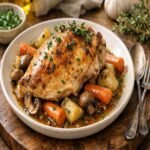
Bone In Chicken Breast Slow Cooker Recipe
Did you know that bone-in chicken cooks more evenly and stays juicier than boneless cuts? The bone acts as a conductor, distributing heat throughout the meat while protecting it from drying out. I learned this principle in my mother's kitchen years ago, watching her slow-roast chickens for Sunday dinners. She understood something nutritionists spend years studying: when you cook with intention and respect for the ingredient, the body responds with gratitude. This slow cooker bone-in chicken breast recipe is my modern take on that wisdom. Like the my oven-baked chicken, this method transforms simple ingredients into soul-nourishing comfort, but with the convenience today's busy families need.
Servings 4
Calories 157kcal
Ingredients
- ⅛ teaspoon onion powder develops umami sweetness that makes broth more satisfying
- 2 fresh lemon slices (optional but recommended
- ¼ cup low-sodium chicken broth provides moisture and prevents sticking while keeping sodium controlled for heart health
- ⅛ teaspoon sweet paprika adds color and subtle sweetness while contributing vitamin C
- ⅛ teaspoon freshly cracked black pepper stimulates digestive enzymes and enhances nutrient absorption
- 4 bone-in, skin-on chicken breasts approximately 2.5 to 3 pounds total weight, with bones providing minerals and collagen that braise into the cooking liquid
- 1 tablespoon salted butter creates richness and fat-soluble vitamin absorption for fat-soluble nutrients in the broth
- ½ teaspoon sea salt enhances protein denaturation and brings out natural chicken flavor without overwhelming
- ½ teaspoon dried parsley adds herbal brightness and contains apigenin, a flavonoid with anti-inflammatory properties
- ¼ teaspoon garlic powder provides allicin compounds that support immunity and develop deeper savory notes
Instructions
Step 1: Create Your Seasoning Blend
- In a small bowl, combine your salt, parsley, garlic powder, pepper, onion powder, and paprika. Don't skip this step—mixing dry seasonings before applying them ensures even distribution. Why? When seasonings are combined dry, they distribute uniformly across the chicken's surface. If you sprinkle individually, some spots get too much salt while others get none. Uneven seasoning creates uneven flavor development. Notice I'm keeping the total seasoning modest. Too much salt denatures proteins in undesirable ways, making them release moisture rather than retain it. This modest approach respects the chicken's natural flavor while creating gentle enhancement.
Step 2: Season Both Sides of the Chicken
- Pat your chicken breasts dry with paper towels—this single step matters more than most recipes admit. Moisture on the surface creates steam, which prevents proper seasoning adhesion. Once dry, rub your seasoning blend generously on both sides of each breast, paying attention to the edges where meat meets bone. The skin absorbs seasonings differently than meat. Press seasonings into the skin firmly—the salt will dissolve slightly into the skin's fat layer, creating pockets of concentrated flavor. This is why we're not removing the skin. That fat protects the meat from overcooking and contributes to the creamy texture of the finished broth.
Step 3: Build Your Slow Cooker Base
- Pour your low-sodium broth into your slow cooker first. This prevents chicken from sticking and ensures even moisture distribution. A 4- to 6-quart slow cooker is ideal—if yours is smaller, stack breasts carefully; if it's larger, they'll still cook beautifully. Arrange your seasoned chicken breasts skin-side up in a single layer if possible. The skin should be exposed to steam and heat above, not submerged. This allows the skin to develop texture while the bottom stays protected by broth. The bone should rest on the cooker bottom, conducting heat evenly throughout the meat.
Step 4: Add Butter and Cover
- Cut your butter into small pieces and distribute them over the top of the chicken. This seems like a small detail, but it matters. Salted butter emulsifies slightly with the broth and creates richness. The fat coats the chicken's surface, helping retain moisture through the long cook. Small pieces melt and distribute more evenly than a single pat. Cover your slow cooker. An airtight seal prevents moisture loss. Leave the lid on—resist the urge to check progress. Every time you lift the lid, you release steam and extend cooking time by approximately 15-20 minutes.
Step 5: Cook on Low for Three Hours
- This timing is precise. Three hours on low heat brings chicken to safe internal temperature while maintaining maximum tenderness. The bones create zones of different cooking rates—the meat near the bone heats more slowly than edges, but after 3 hours, the entire breast reaches 165°F safely and evenly. At the two-hour mark, you might briefly check with a meat thermometer inserted into the thickest part of the largest breast, away from bone. Don't expect 165°F yet—you should see approximately 155-160°F. This tells you that cooking is proceeding correctly. Replace the lid immediately.
Step 6: Rest Before Slicing
- When chicken reaches 165°F internally, remove breasts to a cutting board and cover with foil. This rest period is essential. Proteins have contracted during cooking and are still hot. Resting allows them to relax and reabsorb moisture that migrated toward the surface. A 10-minute rest transforms texture from slightly firm to supremely tender. During resting, the internal temperature may rise 2-3 degrees—this is carryover cooking and is completely normal. It also allows you to handle the chicken safely without burning your fingers.
Notes
- Use bone-in, skin-on breasts exclusively—never boneless - The bone conducts heat, the skin protects moisture, and both contribute collagen and minerals. Boneless breasts dry out and taste flat by comparison. This is non-negotiable for this recipe's success.
- Pat chicken completely dry before seasoning - Any surface moisture creates steam that prevents seasoning adhesion and creates a soggy surface texture. Use paper towels aggressively. This five-second step changes everything.
- Never remove the lid during the first 2.5 hours - Each peek adds 15-20 minutes of cooking time and creates temperature fluctuations that toughen protein. Trust the process. If you're anxious, use a meat thermometer inserted through the sides rather than lifting the lid.
- Embrace the 10-minute rest—it's not optional - This rest allows muscle fibers to relax and reabsorb liquid. Skipping it results in drier chicken. The resting period is when texture improves most dramatically.
- Save the cooking broth for soups and sauces - That liquid is liquid gold. It contains dissolved collagen, minerals, and flavor. Freeze it in ice cube trays for easy portioning into future recipes.