
This post contains affiliate links. As an Amazon Associate I earn from qualifying purchases.
I know what it’s like to stand in front of your open refrigerator on a Wednesday night, exhausted and hungry, with nothing ready to eat. That’s when meal prep became my lifeline. This creamy chicken penne recipe is my secret weapon—make it once on Sunday, and you’ll eat well all week without the stress. You’ll have a restaurant-quality dinner waiting for you on even your busiest evenings. Pair it with carrots and potatoes for a complete meal prep system that keeps your week on track.
Chicken Penne Recipe Meal Prep: Cook Once, Eat All Week
I discovered the power of meal prep during my first year as a registered dietitian. I was working long hours at the clinic and coming home too tired to cook real food. One Sunday, I made a big batch of chicken pasta in my mom’s style—creamy, comforting, loaded with fresh flavors—and portioned it into containers. That week changed everything. I had hot, nourishing meals ready whenever I needed them. No takeout. No skipping dinner. Just love on a plate, waiting for me.
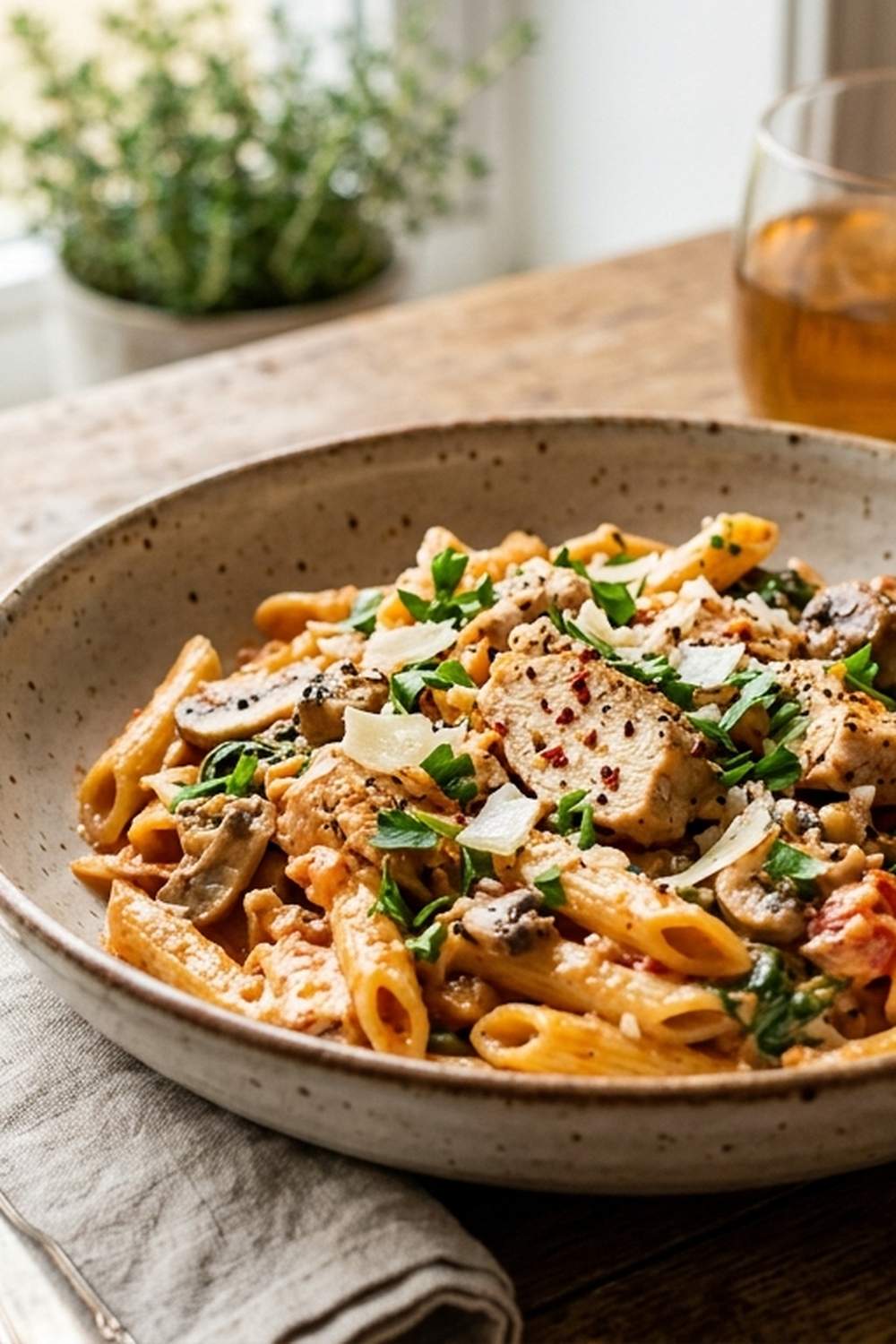
Why This Recipe Is Perfect for Meal Prep
- Saves 45 minutes every evening – No cooking on weeknights means you reclaim nearly 4 hours each week for rest, family, or yourself
- Holds beautifully for 4-5 days – The creamy sauce protects the pasta from drying out, and flavors actually deepen as they sit together
- Transforms into completely different meals – Serve it cold, warm it up, add fresh vegetables, or turn it into a baked casserole using the same base batch
Your Weekly Meal Plan With This Recipe
Here’s exactly how I get five different meals from one batch of chicken penne. Each day feels completely fresh and intentional, even though the foundation stays the same. This is the meal prep strategy I teach my clients who feel stuck in dinner monotony.
- Monday Dinner – Serve the warm pasta straight from the container with extra Parmesan and fresh basil on top. Keep it simple so you taste every flavor you worked to build
- Wednesday Lunch – Toss a portion with fresh baby spinach and roasted red peppers while it warms. The heat wilts the greens and adds brightness without extra cooking
- Friday Dinner – Layer your portion in a baking dish with mozzarella and bake at 375°F for 15 minutes to create a warm, cheese-crusted casserole that feels brand new
- Saturday Lunch – Serve chilled over fresh arugula with a squeeze of lemon juice for a completely different eating experience. It becomes light and almost salad-like
- Sunday Brunch or Light Supper – Warm a small portion and serve it alongside a simple green salad. By now, the flavors are deeply integrated, which is when this dish tastes most sophisticated
The Ingredients – Scaled for a Full Week
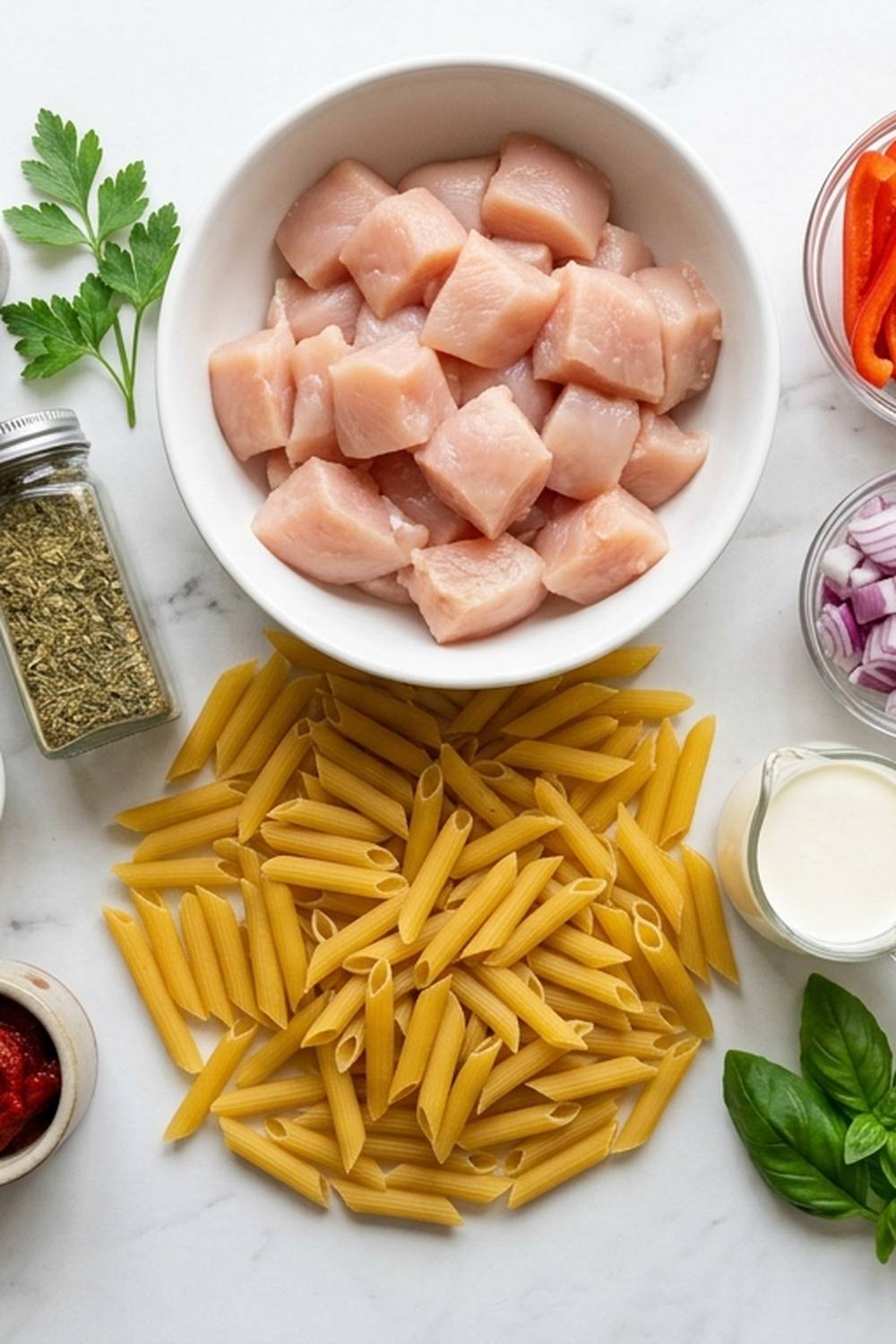
I’ve scaled these ingredients to make 8 generous servings, which gives you flexibility to eat larger portions some days and smaller portions others. When you’re buying for a week, choose ingredients at their peak quality. Your taste buds will thank you, and your week will feel intentional from the very first ingredient you select.
For the Fresh Topping
- 2 tablespoons extra-virgin olive oil (the quality matters here since it won’t be cooked—choose one you’d taste on its own)
- 4 teaspoons balsamic vinegar (aged balsamic is thicker and more complex than standard vinegar)
- 4 cups grape tomatoes, halved (choose ones that are deeply colored and fragrant—they’ll be sweeter and more flavorful throughout the week)
- 6 tablespoons fresh basil, chopped (use your hands to tear it gently rather than cutting with a knife, which bruises the leaves)
- 2 cloves garlic, minced (fresh garlic loses pungency over several days, so you’ll mince this right before assembling plates)
- Kosher salt and black pepper to taste (for seasoning the fresh topping just before serving)
For the Pasta and Chicken
- 2 pounds boneless skinless chicken breasts (cut into 1-inch pieces—uniform size means even cooking across your entire batch)
- Kosher salt and black pepper for seasoning the chicken
- 2 tablespoons extra-virgin olive oil, divided (one tablespoon for cooking the chicken, one for any additional cooking needs)
- 20 ounces penne pasta (dried—buy the bronze-cut version if you can find it, as it holds sauce better than smooth pasta)
For the Creamy Sauce
- 1 teaspoon Italian seasoning (dried herbs hold their flavor better through reheating than fresh ones)
- 2 cups chicken broth, low-sodium (you control the salt this way, important for meal prep that sits all week)
- 2 medium shallots, diced finely (sweeter than onions and they break down into the sauce almost completely)
- 2 cups freshly grated Parmesan cheese, plus extra for serving (grate it yourself—pre-grated versions have anti-caking agents that make sauce grainy)
- 10 cloves garlic, minced (the sauce mellows the raw garlic flavor, making it rich rather than sharp)
- ½ cup dry white wine or white cooking wine (adds acidity that brightens the cream—don’t skip this)
- 1 teaspoon fresh lemon zest (adds brightness that cuts through the richness after days of storage)
- 4 tablespoons unsalted butter (cold and cut into pieces—this creates a silkier sauce than using oil alone)
- 2 cups heavy cream (full-fat is essential here for proper texture and richness)
- ½ teaspoon crushed red pepper flakes (adds gentle heat without overpowering the delicate cream sauce)
- 4 tablespoons all-purpose flour (this is your thickening agent—measure carefully to avoid lumps)
The Meal Prep Process: How to Make Chicken Penne Recipe in Bulk
I approach batch cooking like a system, not just a recipe. You’re going to organize your workspace, prep everything before you turn on the heat, and work efficiently. This isn’t about rushing—it’s about flowing from one step to the next without stopping to find ingredients or wash dishes mid-process. You’ll finish everything in about 45 minutes, and you’ll have eight dinners ready.
Step 1: Prep Your Mise en Place (The Foundation)
Before any heat touches any pan, measure everything and arrange it on your counter in the order you’ll use it. This is the professional chef’s secret that transforms cooking from stressful to calm. Dice your shallots finely. Mince your garlic. Cut your chicken into uniform 1-inch pieces. Pour your broth and wine into measuring cups. This takes about 12 minutes, but it saves you 20 minutes of frantic searching later.
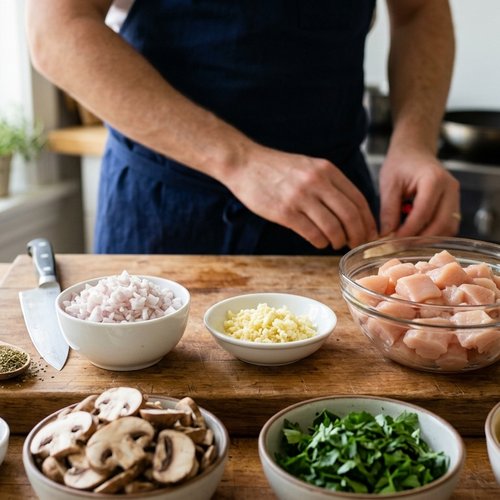
Set out three large containers or bowls on your counter: one for cooked chicken, one for cooked pasta, and one for your finished sauce. Having these ready means you’re not searching for containers when your hands are full of hot food. It’s the small decisions that make meal prep feel either chaotic or peaceful.
Step 2: Start the Water and Make Your Fresh Topping
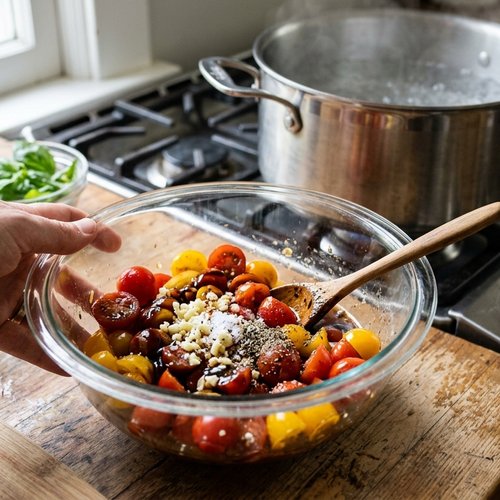
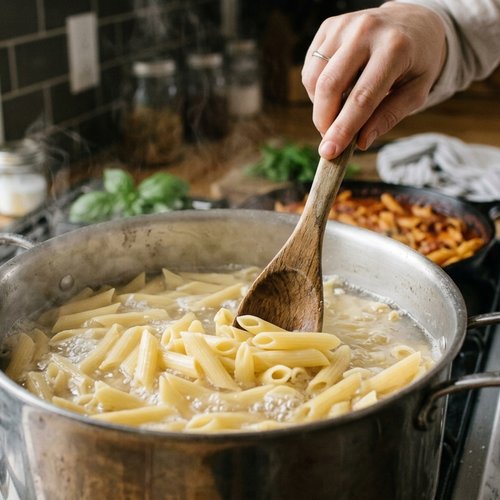
Fill a large pot with water and set it to boil over high heat. Salt the water generously—it should taste like the sea. While you’re waiting for it to boil (about 5-7 minutes), combine your grape tomatoes, basil, 2 tablespoons olive oil, balsamic vinegar, minced garlic, and a pinch of salt and pepper in a medium bowl. Let this sit while you finish cooking. The flavors will marry beautifully, and the tomatoes will release their juices. This fresh topping is what you’ll add at serving time, keeping it bright and vibrant all week long.
Step 3: Cook the Pasta to Perfect Tenderness
Once your water is at a rolling boil, add the penne. Cook for one minute less than the package instructions suggest—you want it just shy of fully tender because it will continue softening when you combine it with the warm sauce. Stir occasionally so nothing sticks. When the time is up, drain it in a colander and set it aside. Don’t rinse it. The starch on the outside helps the sauce cling to every piece.
Step 4: Sear the Chicken Until Golden
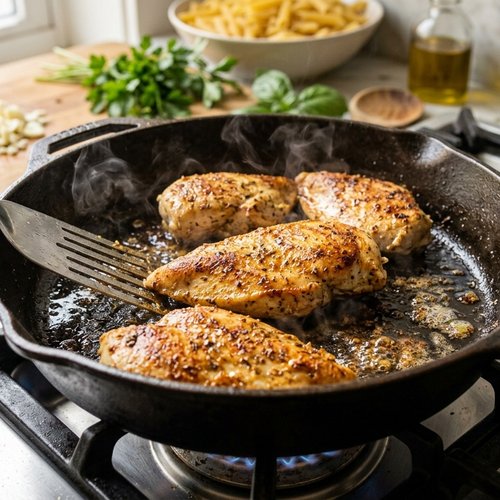
While your pasta drains, heat 1 tablespoon of olive oil in a large skillet over medium-high heat. Arrange your chicken pieces in a single layer—don’t crowd the pan. Let them sit undisturbed for 3 minutes so they develop a golden crust, then stir occasionally for another 4-5 minutes until cooked through. The internal temperature should reach 165°F. Transfer your cooked chicken to a clean plate. You’ve just built flavor that will anchor your entire meal.
Step 5: Build Your Sauce Foundation
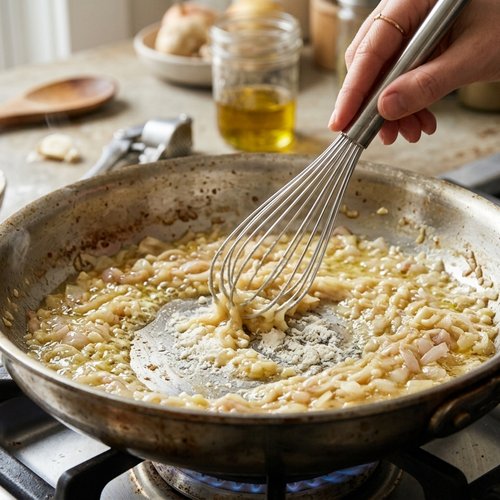
Keep the heat at medium and add your butter to the same skillet where the chicken cooked. Once it’s melted and foaming slightly, add your diced shallots. Cook for exactly 1 minute—you want them softened but not brown. Then add your minced garlic and cook for another 30 seconds until fragrant. Whisk in your flour immediately, stirring constantly for 1 minute. This prevents lumps. You’re creating what’s called a roux, which will thicken your sauce to perfect creaminess.
Step 6: Create Your Silky Sauce
Slowly pour in your chicken broth while whisking continuously. Don’t dump it all at once—go slowly and keep whisking. This constant motion prevents lumps from forming. Once the broth is incorporated and smooth, pour in your white wine. The acidity will brighten everything. Reduce the heat to low and let this simmer for 3-5 minutes until it thickens slightly and becomes more luxurious.
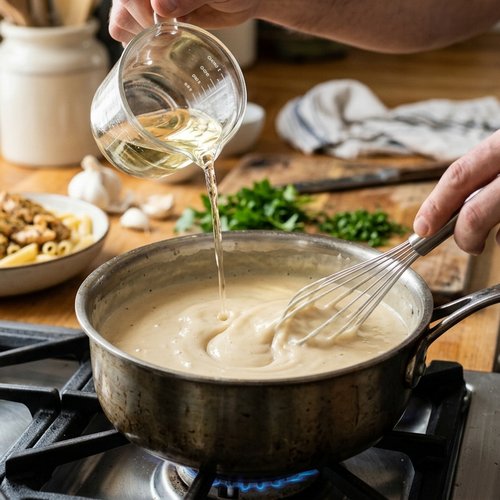
Add your cooked chicken back into the pan. Stir in your heavy cream, Italian seasoning, red pepper flakes, and lemon zest. Bring everything to a gentle simmer over medium-low heat—don’t let it boil aggressively or the cream may break. Once it’s simmering, remove it from heat and stir in your freshly grated Parmesan cheese. The residual heat will melt it into a silky coating.
Step 7: Combine Your Components
Add your drained pasta to the sauce and fold everything together gently but thoroughly. Every piece of pasta should be coated with sauce. Taste it. Season with salt and pepper as needed. Remember that flavors will concentrate slightly as this sits in the refrigerator, so season it to be just right now, knowing it’ll taste even more flavorful tomorrow.
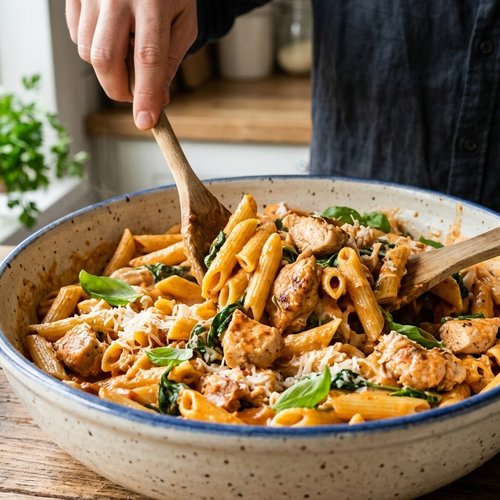
Storage and Organization System
- Glass Pyrex containers with snap lids – Glass doesn’t absorb cream sauce flavors the way plastic does, and you can see exactly how much you have left at a glance. It heats more evenly too
- Portion into 1.5-cup servings – This is the perfect amount for a satisfying dinner without being overwhelming. Use a measuring cup to be consistent across all containers
- Label with date and contents using a permanent marker – Write “Chicken Penne – Made [date]” on the lid. You’ll know at a glance what you’re grabbing and when you made it
- Store on the same shelf in your refrigerator – Keep all your meal prep containers in one visible spot so you remember they’re there and don’t default to takeout
How to Reheat Without Losing Quality
The beauty of this dish is how forgiving it is when you reheat it. The creamy sauce actually protects the pasta from drying out, which is my favorite thing about this particular recipe for meal prep.
Stovetop method (my preference): Place your portion in a skillet over medium-low heat. Add a splash of milk or cream—about 2 tablespoons per serving—which loosens the sauce back to its original consistency. Stir occasionally for 5-7 minutes until heated through. This method tastes most like fresh-cooked pasta.
Microwave method (quickest): Place your portion in a microwave-safe bowl and cover loosely with a paper towel. Microwave on 50% power for 3-4 minutes, stirring halfway through. The lower power prevents the cream from breaking. If it seems thick, add a tablespoon of milk and stir.
Oven method (for larger portions): Transfer your desired amount to an oven-safe dish, cover with foil, and warm at 350°F for 12-15 minutes. This is lovely when you want to serve multiple people at once.
Can I Freeze Chicken Penne Recipe?
Yes, and I do this often for future weeks. Your chicken penne freezes beautifully for up to 3 months. Portion it into freezer containers (leaving a half-inch of headspace because sauce expands when it freezes), label it with the date, and stack it flat in your freezer.
Thaw in the refrigerator overnight—never on the counter. This prevents bacterial growth and keeps your sauce smooth. Reheat using the stovetop or oven method for best results. The microwave works, but the stovetop gives you more control over the final texture. When you thaw it, the sauce might look slightly separated—just stir it well and add a tablespoon of milk, and it’ll come back together beautifully.
I freeze half my batch on Sunday and save it for a week when I know I’ll be extra busy. It’s like giving yourself a gift from your past self.
Nutrition Information
Per serving (1.5 cups): Approximately 580 calories, 38g protein, 48g carbohydrates, 22g fat (11g saturated), 85mg cholesterol, 820mg sodium, 2g fiber, 6g sugar. This data aligns with USDA dietary guidelines for a balanced main course.
From a nutritional perspective, what I love about this recipe is the protein-to-carb ratio. The chicken gives you sustained satiety—that feeling of fullness that lasts through your afternoon. The pasta provides energy and fiber. The cream sauce includes fat, which helps absorb fat-soluble vitamins and keeps you satisfied. When you meal prep this all week, you’re giving your body consistent, well-balanced nutrition that supports stable blood sugar and mental clarity. That’s what I see happen with my clients who build their weeks around recipes like this one.
What to Pair With Chicken Penne Recipe Throughout the Week
The pasta is rich and satisfying on its own, but pairing it with something fresh and bright prevents the week from feeling repetitive. Here’s how I rotate sides to keep everything interesting while still respecting the meal prep system.
- Monday with a Simple Green Salad – Arugula with lemon vinaigrette cuts through the richness beautifully and tastes crisp without any cooking
- Wednesday with Roasted Vegetables – Throw some broccoli or Brussels sprouts on a sheet pan with olive oil and sea salt. Roast at 425°F for 20 minutes while you reheat the pasta. The contrast is lovely
- Friday with Garlic Bread – Slice a crusty baguette lengthwise, brush with olive oil mixed with minced garlic, and broil until golden. Let yourself have this indulgence at the end of the week
- Saturday with Fresh Fruit – Serve alongside grapes or a simple melon salad. Something light and cool next to the warm, creamy pasta feels refreshing
- Sunday with Roasted Carrots and Potatoes – If you roasted these earlier in the week as another meal prep component, serve them alongside for an even heartier meal that feels complete and grounded
Expert’s Nutritional Tip
As a registered dietitian, I want you to understand something about the cream in this recipe. Heavy cream contains fat-soluble vitamins like vitamins A, D, and K2—nutrients your body needs to function well. When we combine that cream with the lycopene in tomatoes (the compound that makes them red and gives them antioxidant power), the fat actually helps your body absorb the lycopene better. This is why cooking tomatoes in fat, or serving them with fat-containing sauces, is nutritionally superior to eating raw tomatoes alone. Your chicken penne isn’t indulgent—it’s intelligently designed for your body to absorb maximum nutrition.
Make-Ahead Guide: Beyond Sunday
I teach my clients that meal prep doesn’t have to happen all on one day. Some weeks, I cook my chicken on Sunday, prepare my sauce on Monday evening (it takes 15 minutes), and combine everything on Tuesday. This spreads the work and prevents Sunday from feeling overwhelming.
You can also freeze your sauce separately from your pasta. Cook the sauce, cool it completely, and freeze it in a flat freezer bag. Freeze your cooked pasta in another container. When you’re ready to eat, thaw both and combine them while reheating. This gives you flexibility to pair this sauce with different pasta shapes or add different proteins some weeks.
Another approach: Make the fresh tomato topping on Friday evening instead of Sunday. The flavors will be at their brightest when you eat it Monday through Wednesday. This small adjustment keeps the fresh element tasting as vibrant as possible.
Common Mistakes to Avoid
Mistake #1: Cooking the pasta to complete tenderness. When you cook pasta for meal prep, cook it one minute under. It continues softening from the residual heat and the moisture in the sauce. By Wednesday, you want it tender but not mushy. Taste as you go and learn your specific preference.
Mistake #2: Skipping the fresh topping until the end of the week. I see people combine everything together and then wonder why it tastes flat by Friday. The fresh basil and tomato mixture should be added as you serve. Prepare it Sunday, store it separately, and add it fresh to each plate. This keeps your dish tasting alive all week.
Mistake #3: Using pre-shredded Parmesan cheese. Those anti-caking agents (cellulose) create a grainy texture in cream sauce. Shred your own cheese using a box grater or microplane. It takes two extra minutes and transforms the entire sauce quality.
Mistake #4: Storing the sauce too thick. As your sauce cools and sits, it thickens. When you reheat it, add a splash of milk to return it to the consistency you want. This is normal and completely manageable—just plan for it.
Seasonal Variations
Spring: Replace the fresh tomato topping with a bright mixture of fresh peas, lemon zest, and diced fresh mint. Add these to your warm pasta right before eating. Spring peas are sweet and delicate—they taste like the season.
Summer: Keep the tomato topping but add fresh corn kernels and diced cucumber to it. The combination is bright, abundant, and tastes like summer entertaining without any extra cooking.
Fall: Replace some of the cream with pumpkin puree (add it when you add the cream) and use sage instead of basil. Add diced roasted butternut squash to your pasta. It’s the same recipe base transformed into something that tastes like autumn.
Winter: Add diced roasted red peppers to your pasta and use the fresh topping with caramelized garlic instead of raw. Top with crispy sage leaves fried in butter. It’s warming, sophisticated, and tastes like comfort in the coldest months.
Chicken Penne Recipe
Ingredients
For the Fresh Topping
- 2 tablespoon extra-virgin olive oil (the quality matters here since it won't be cooked
- 4 teaspoon balsamic vinegar aged balsamic is thicker and more complex than standard vinegar
- 4 cup grape tomatoes, halved (choose ones that are deeply colored and fragrant
- 6 tablespoon fresh basil, chopped use your hands to tear it gently rather than cutting with a knife, which bruises the leaves
- 2 clove garlic, minced fresh garlic loses pungency over several days, so you'll mince this right before assembling plates
- Kosher salt and black pepper to taste for seasoning the fresh topping just before serving
For the Pasta and Chicken
- 2 pound boneless skinless chicken breasts (cut into 1-inch pieces
- Kosher salt and black pepper for seasoning the chicken
- 2 tablespoon extra-virgin olive oil, divided one tablespoon for cooking the chicken, one for any additional cooking needs
- 20 ounce penne pasta (dried
For the Creamy Sauce
- 1 teaspoon Italian seasoning dried herbs hold their flavor better through reheating than fresh ones
- 2 cup chicken broth, low-sodium you control the salt this way, important for meal prep that sits all week
- 2 medium shallots, diced finely sweeter than onions and they break down into the sauce almost completely
- 2 cup freshly grated Parmesan cheese, plus extra for serving (grate it yourself
- 10 clove garlic, minced the sauce mellows the raw garlic flavor, making it rich rather than sharp
- ½ cup dry white wine or white cooking wine (adds acidity that brightens the cream
- 1 teaspoon fresh lemon zest adds brightness that cuts through the richness after days of storage
- 4 tablespoon unsalted butter (cold and cut into pieces
- 2 cup heavy cream full-fat is essential here for proper texture and richness
- ½ teaspoon crushed red pepper flakes adds gentle heat without overpowering the delicate cream sauce
- 4 tablespoon all-purpose flour (this is your thickening agent
Instructions
Step 1: Prep Your Mise en Place (The Foundation)
- Before any heat touches any pan, measure everything and arrange it on your counter in the order you'll use it. This is the professional chef's secret that transforms cooking from stressful to calm. Dice your shallots finely. Mince your garlic. Cut your chicken into uniform 1-inch pieces. Pour your broth and wine into measuring cups. This takes about 12 minutes, but it saves you 20 minutes of frantic searching later. Set out three large containers or bowls on your counter: one for cooked chicken, one for cooked pasta, and one for your finished sauce. Having these ready means you're not searching for containers when your hands are full of hot food. It's the small decisions that make meal prep feel either chaotic or peaceful.
Step 2: Start the Water and Make Your Fresh Topping
- Fill a large pot with water and set it to boil over high heat. Salt the water generously—it should taste like the sea. While you're waiting for it to boil (about 5-7 minutes), combine your grape tomatoes, basil, 2 tablespoons olive oil, balsamic vinegar, minced garlic, and a pinch of salt and pepper in a medium bowl. Let this sit while you finish cooking. The flavors will marry beautifully, and the tomatoes will release their juices. This fresh topping is what you'll add at serving time, keeping it bright and vibrant all week long.
Step 3: Cook the Pasta to Perfect Tenderness
- Once your water is at a rolling boil, add the penne. Cook for one minute less than the package instructions suggest—you want it just shy of fully tender because it will continue softening when you combine it with the warm sauce. Stir occasionally so nothing sticks. When the time is up, drain it in a colander and set it aside. Don't rinse it. The starch on the outside helps the sauce cling to every piece.
Step 4: Sear the Chicken Until Golden
- While your pasta drains, heat 1 tablespoon of olive oil in a large skillet over medium-high heat. Arrange your chicken pieces in a single layer—don't crowd the pan. Let them sit undisturbed for 3 minutes so they develop a golden crust, then stir occasionally for another 4-5 minutes until cooked through. The internal temperature should reach 165°F. Transfer your cooked chicken to a clean plate. You've just built flavor that will anchor your entire meal.
Step 5: Build Your Sauce Foundation
- Keep the heat at medium and add your butter to the same skillet where the chicken cooked. Once it's melted and foaming slightly, add your diced shallots. Cook for exactly 1 minute—you want them softened but not brown. Then add your minced garlic and cook for another 30 seconds until fragrant. Whisk in your flour immediately, stirring constantly for 1 minute. This prevents lumps. You're creating what's called a roux, which will thicken your sauce to perfect creaminess.
Step 6: Create Your Silky Sauce
- Slowly pour in your chicken broth while whisking continuously. Don't dump it all at once—go slowly and keep whisking. This constant motion prevents lumps from forming. Once the broth is incorporated and smooth, pour in your white wine. The acidity will brighten everything. Reduce the heat to low and let this simmer for 3-5 minutes until it thickens slightly and becomes more luxurious. Add your cooked chicken back into the pan. Stir in your heavy cream, Italian seasoning, red pepper flakes, and lemon zest. Bring everything to a gentle simmer over medium-low heat—don't let it boil aggressively or the cream may break. Once it's simmering, remove it from heat and stir in your freshly grated Parmesan cheese. The residual heat will melt it into a silky coating.
Step 7: Combine Your Components
- Add your drained pasta to the sauce and fold everything together gently but thoroughly. Every piece of pasta should be coated with sauce. Taste it. Season with salt and pepper as needed. Remember that flavors will concentrate slightly as this sits in the refrigerator, so season it to be just right now, knowing it'll taste even more flavorful tomorrow.
FAQs
Can I double this recipe to have meals for two weeks?
Yes, absolutely. Double the ingredients and follow the same process. You’ll need a larger skillet or work in two batches. I recommend freezing half of it after day four rather than keeping all of it refrigerated. Cream-based sauces stay fresher longer when frozen than when stored in the refrigerator for extended periods. It’s the smart strategy when you want to batch cook efficiently.
What if I don’t have fresh basil for the topping?
You have options. Fresh parsley works beautifully. Fresh mint is wonderful. Even a small amount of freshly chopped dill is delicious. Or skip the fresh herb and add a teaspoon of Italian seasoning to your tomato mixture when you prepare it. It won’t taste identical, but it will be absolutely delicious. Meal prep is about making it work with what you have.
Can I make this with a different protein instead of chicken?
Completely. I make this with shrimp (add it in the final two minutes of cooking), with white beans (skip the searing step, just add them to the sauce), or with ground turkey. The sauce is what makes this recipe, so swap the protein based on what you have and what you’re craving. If you use a heartier protein like beef, just increase your simmering time slightly so it tenderizes in the sauce.
How do I prevent my cream sauce from breaking or getting grainy?
Three things: Keep your heat at medium-low once you add the cream. Never let it boil aggressively. Add your Parmesan cheese after you remove it from heat, using the residual warmth to melt it. And use freshly grated cheese, not pre-shredded. If your sauce does break (looks separated or grainy), whisk in a tablespoon of cold milk vigorously. It usually comes back together. This happened to me once early in my cooking career, and now I know it’s fixable—don’t panic.
Is this recipe good for company, or is it only for meal prep?
It’s perfect for both. For company, make a fresh batch instead of reheating leftovers. It comes together in 40 minutes, tastes restaurant-quality, and impresses without making you exhausted. I serve it often when friends come over, topping it with fresh basil and extra Parmesan, with crusty bread on the side. The same recipe that fuels your week can also be your show-stopping dinner party dish.
More Meal Prep Recipes You’ll Love
- Broccoli Cheddar Chicken and Noodle Casserole – A sheet pan version with vegetables already mixed in
- Baked Mac N Cheese Recipe – The classic comfort pasta that builds beautifully throughout the week
- my weeknight pasta – A lighter option when you want something fresher than cream sauce
When you build your week around recipes like this chicken penne, something profound happens. You stop being reactive about dinner. You’re not scrolling through takeout apps at 6 p.m., exhausted and overwhelmed. Instead, you’re opening your refrigerator and seeing your own carefully prepared meal waiting for you. That’s not just practical—that’s reclaiming your time and your peace. That’s choosing yourself and your family’s wellbeing with every meal you’ve already prepared. Start with this recipe. Make it once. See how it feels to eat well all week without the stress. I promise you, once you experience this ease, you’ll never go back. Happy Cooking!