
This post contains affiliate links. As an Amazon Associate I earn from qualifying purchases.
Getting kids to eat a one-skillet chicken potato dinner feels impossible—until you try this approach. I’ve watched countless parents stress over getting their children to eat real food, and I understand that exhaustion in my bones. I grew up watching my mother transform simple ingredients into meals that brought our whole family to the table, and I learned something vital: when kids help create the food, they’re far more likely to eat it. This skillet meal changes that dynamic completely. It’s creamy without feeling heavy, loaded with hidden vegetables, and most importantly, it tastes like someone who loves them spent time in the kitchen. You can involve your children at every step, and they’ll feel the pride of cooking something delicious together. If you’re looking for other family-friendly options, my baked chicken caprese recipe is another winner with picky eaters.
One-Skillet Chicken Potato Dinner the Whole Family Will Actually Eat (Picky Eaters Included)
I remember the first time I made this for my neighbor’s family. Her seven-year-old had rejected nearly every chicken recipe I’d suggested—too dry, too bland, too “fancy.” But when she smelled this cooking on the stove, something shifted. The aroma alone drew her into the kitchen. She watched the potatoes soften, saw the spinach wilt into that creamy sauce, and asked if she could try it. She went back for seconds. Her mother texted me later that night with three words: “She ate it.” That’s the moment I knew this recipe deserved a permanent place in every family’s rotation.
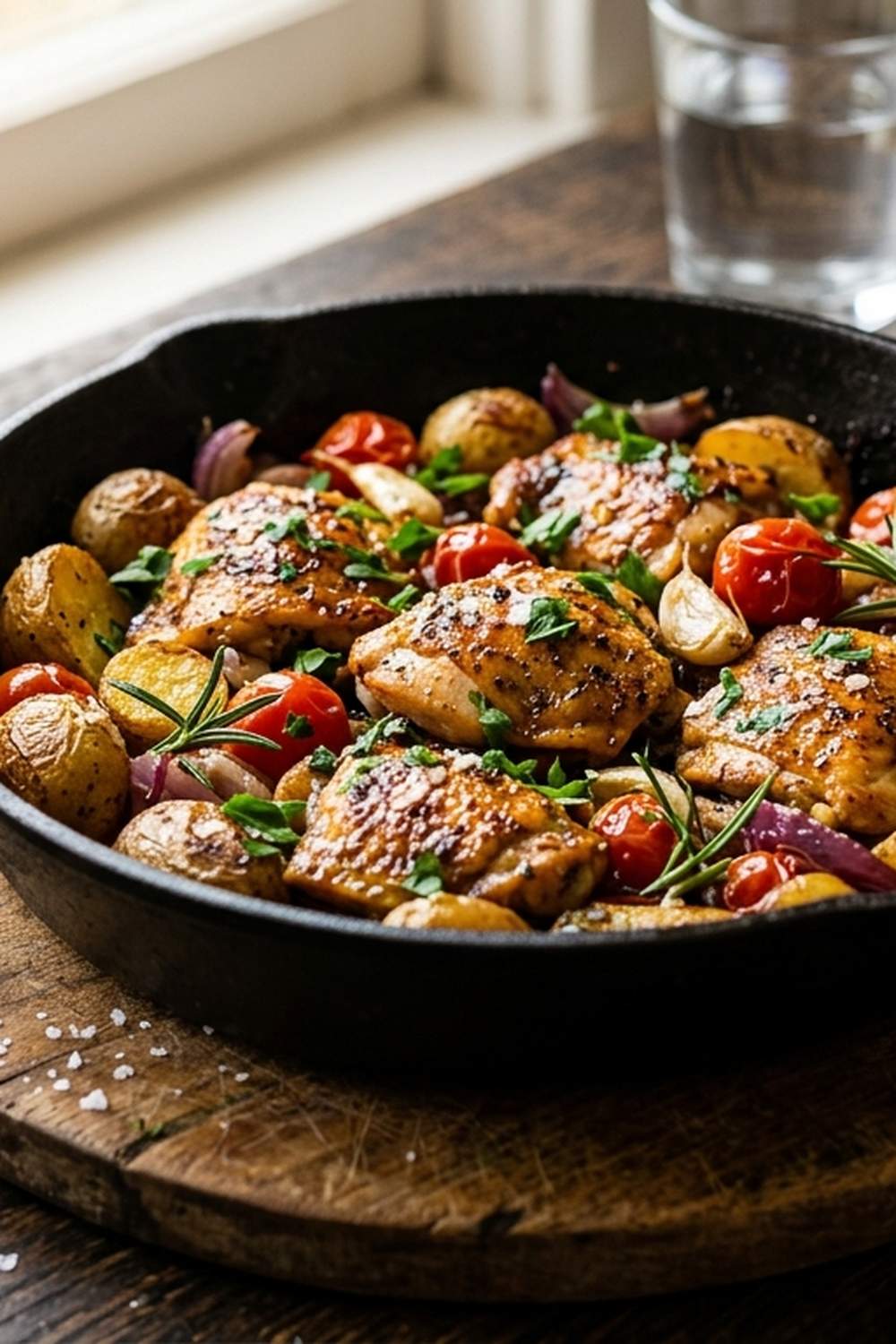
Why Kids Love This Version
This skillet works where other chicken recipes fail because it addresses exactly what picky eaters care about: texture variety, familiar flavors, and food they can actually see and understand. There’s no mysterious sauce or hidden meat texture that frightens them. Instead, they see soft potatoes, recognizable chicken pieces, and a creamy sauce that tastes like comfort. The cherry tomatoes add bright pops of color and natural sweetness that balance the savory elements beautifully.
- Creamy sauce that kids naturally gravitate toward – Picky eaters often prefer foods with moisture and richness, and the cream-based sauce here satisfies that craving without being heavy or unappetizing
- Soft, tender potatoes that require no knife skills at the table – Kids feel successful eating food they can manage independently, which builds confidence around mealtimes
- Hidden spinach that disappears into the sauce – As a dietitian, I know that adding leafy greens to creamy dishes makes them nearly undetectable, so kids get crucial iron and calcium without a fight
- Bite-sized portions they can control – Halved potatoes and halved chicken breasts mean kids aren’t overwhelmed by huge pieces on their plates
How to Get Kids Involved in Making This
One of my core beliefs is that cooking together builds more than just meals—it builds memories and confidence. This recipe has natural stopping points where every age can contribute meaningfully. When children participate in food preparation, they develop ownership over what they’re eating. That ownership translates directly to willingness to try new foods.
- Ages 3-5: Cherry tomato halving (with supervision) – Give toddlers cherry tomatoes and a child-safe knife or let them break them by hand. This develops fine motor skills while keeping them engaged in food preparation. Adult supervision is required, but they feel like real chefs.
- Ages 6-9: Potato halving and measuring – School-age children can handle small kitchen knives under direct supervision and can measure ingredients using cups and spoons. Let them count potatoes as they add them to the pan. This builds math skills alongside cooking confidence.
- Ages 10 and up: Browning chicken and managing heat – Older kids can handle the initial browning of seasoned chicken under your watchful eye. Teach them how to test for doneness with a meat thermometer (safety first!), and let them manage the sauce combining step. These are real cooking responsibilities.
The Ingredients – Hidden Nutrition, Visible Deliciousness
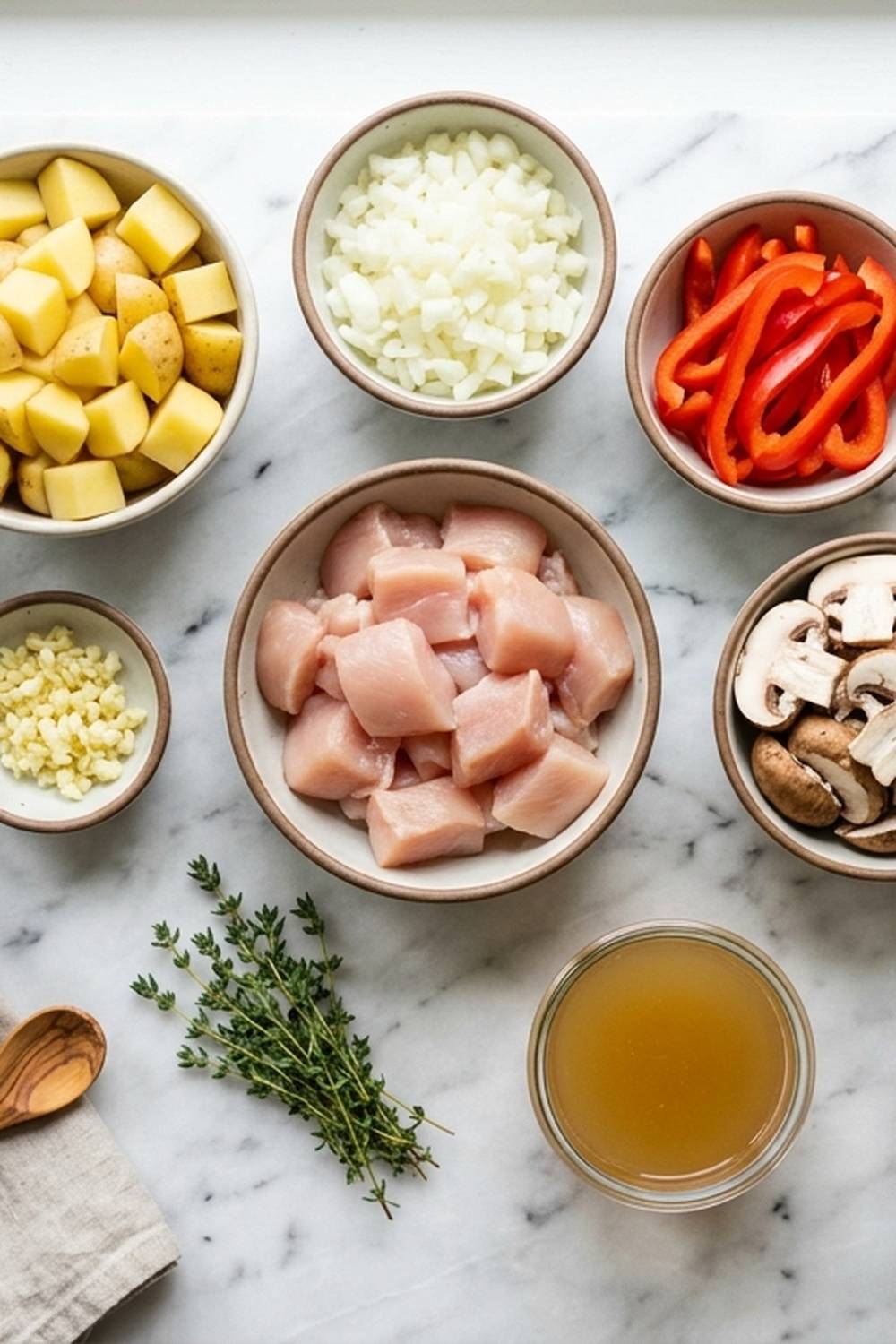
As a registered dietitian, I approach ingredient selection through two lenses: what will nourish growing bodies and what will actually make it onto picky eaters’ plates. This recipe succeeds at both. The spinach is the nutritional secret weapon here—it’s mild enough to disappear completely into the creamy sauce, but it delivers iron, folate, and lutein for eye health. The cherry tomatoes add lycopene, a powerful antioxidant that supports heart health. And that cream-based sauce? It’s not indulgent fluff. The fat-soluble vitamins from the chicken, cheese, and cream help your child’s body absorb the fat-soluble vitamins A, D, E, and K from the vegetables. This is strategic nutrition that tastes like comfort.
- 1 pound little yellow or red potatoes, halved (leave skins on for fiber and nutrients)
- 1 teaspoon minced fresh garlic (or 1/2 teaspoon garlic powder if your kids dislike texture)
- 1/4 teaspoon dried basil (adds depth without overpowering)
- 1/4 teaspoon fresh ground black pepper
- 2 tablespoons vegetable oil (for browning without smoking)
- 1 teaspoon kosher salt (divided between seasoning and sauce for better flavor distribution)
- 2 large boneless skinless chicken breasts, halved lengthwise (or 4 small breasts—thinner pieces cook more evenly)
- 1/2 cup heavy cream (full-fat, not half-and-half, for proper sauce consistency)
- 1 cup fresh cherry tomatoes, halved (choose ripe ones for natural sweetness)
- 1/4 teaspoon dried oregano (or 3/4 teaspoon fresh if available)
- 1 cup fresh spinach, chopped (baby spinach works beautifully and is less intimidating for kids)
- 1 tablespoon cornstarch (creates silky texture without lumps)
- 2 tablespoons fresh lemon juice (brightens the sauce and aids nutrient absorption)
- 1/2 cup freshly grated Parmesan cheese (not the pre-shredded kind—it contains anti-caking agents that create grainy texture)
- 1/2 cup low-sodium chicken broth (lower sodium is important for children’s developing kidneys)
Serves 4 as a complete main course with sides, or 5-6 if serving with substantial side dishes.
How to Make One-Skillet Chicken Potato Dinner for the Whole Family
I’ve structured this recipe as a journey you can take together, not just a list of instructions to follow alone. Each step has natural pauses where kids can help, learn, and feel proud of their contribution. The best part? Everything happens in one skillet, which means less cleanup and more time for conversation around the table.
Step 1: Season and Brown Your Chicken
Start by patting your halved chicken breasts dry with paper towels. This might seem like a small step, but moisture on the surface prevents proper browning. Let your children help with this—it’s a safe, tactile task. Sprinkle salt and pepper generously on both sides of each piece. Heat your oil in a large skillet over medium-high heat for about one minute. Before adding chicken, carefully hold your hand about 6 inches above the pan—you should feel clear heat radiating upward. This signals the oil is ready. Place chicken pieces in the hot skillet and resist the urge to move them for 3-4 minutes. Keep young children back from the stove during this browning phase—the oil will pop and splatter. After 3-4 minutes, flip each piece using tongs and brown the other side for another 3-4 minutes. You’re looking for golden-brown exteriors that will seal in moisture during simmering. Transfer browned chicken to a clean plate.

Step 2: Build Your Flavor Base
In the same skillet with the remaining oil and browned bits (called fond—this is liquid gold for flavor), add your halved potatoes, halved cherry tomatoes, and minced garlic. If your children helped prepare the tomatoes and potatoes earlier, remind them of their contribution now. Stir everything together and let it cook untouched for 1-2 minutes so the garlic releases its aromatics. The kitchen will smell absolutely incredible at this point—that’s when you know the Maillard reaction is creating deep flavors. Now add the dried oregano and basil, stirring to distribute the herbs evenly. This is another perfect job for older kids—they can control the wooden spoon’s gentle stirring motion.
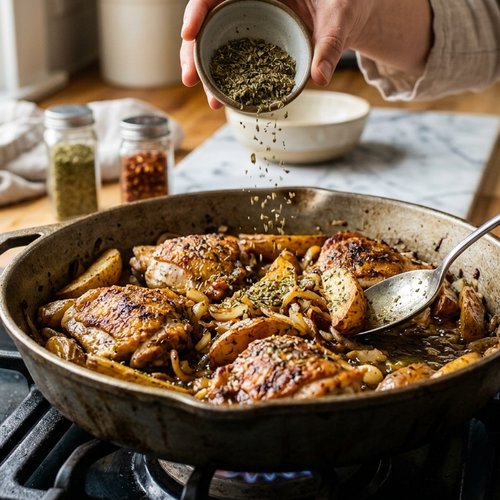
Step 3: Introduce the Spinach
Add your chopped fresh spinach to the skillet, stirring until it wilts into the potatoes and tomatoes. This happens in about 30 seconds. Younger children love watching the bright green spinach seem to “disappear” into the other ingredients—it’s like magic, and it’s a perfect time to talk about how the spinach is going to help them grow strong. The spinach flavor is completely masked at this point, which is exactly what we want for picky eaters.
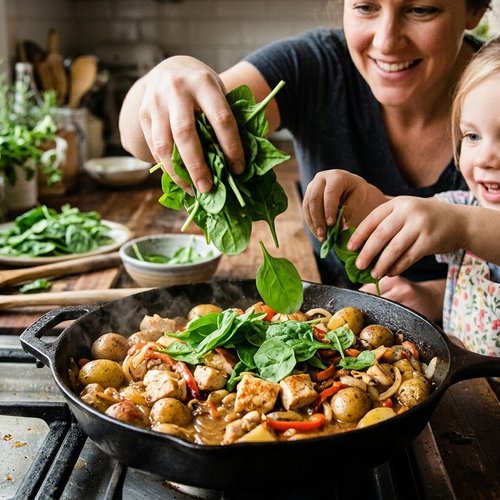
Step 4: Create Your Silky Sauce
In a small bowl, whisk together your chicken broth and cornstarch until completely smooth with no lumps. This step prevents your sauce from becoming grainy. Have your kids do the whisking—it builds their confidence in the kitchen. Pour this mixture into the skillet with the potatoes and spinach, stirring gently to combine everything. Now pour in the heavy cream and stir until you have a cohesive, silky liquid. The cornstarch will thicken the cream as everything cooks, creating that restaurant-quality sauce that makes kids ask for seconds.
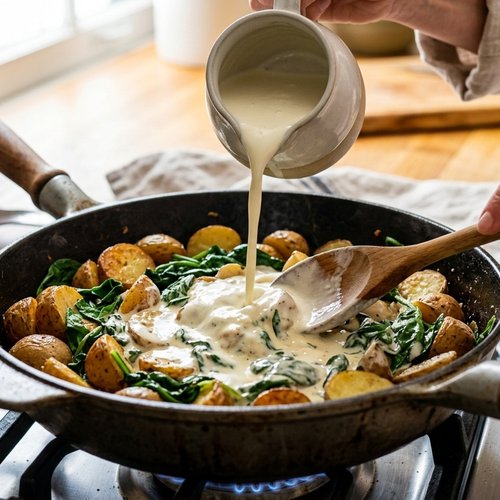
Step 5: Bring It All Together
Return your browned chicken pieces to the skillet, nestling them into the potato and sauce mixture so they’re partially submerged. This ensures even cooking and maximum flavor absorption. Increase the heat to medium and bring everything to a gentle simmer—you’ll see small bubbles breaking the surface. Once it reaches a simmer, reduce heat to medium-low, cover the skillet with a lid, and let everything cook undisturbed for 15-20 minutes. This is the perfect time to set the table together or prepare side dishes. The gentle heat will cook your potatoes until they’re fork-tender and will bring your chicken to a safe internal temperature of 165 degrees Fahrenheit.
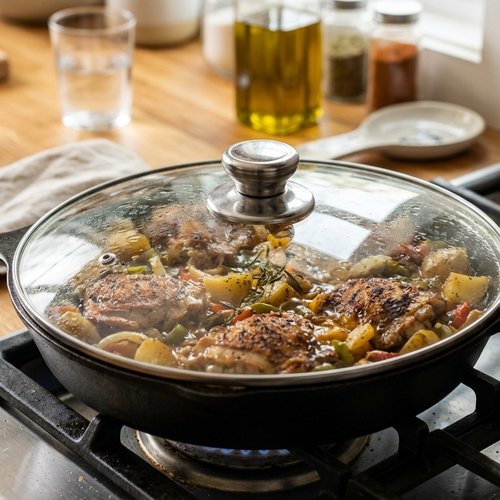
Step 6: The Final Touch
After 15-20 minutes, carefully remove the lid (watch for the escaping steam—keep children back during this step). Test a potato with a fork; it should break apart easily. Check your chicken by inserting a meat thermometer into the thickest piece; it should read 165 degrees Fahrenheit. Once everything is cooked through, remove the skillet from heat and sprinkle the freshly grated Parmesan cheese over the entire dish, stirring gently to distribute it throughout the creamy sauce. The residual heat will melt the cheese perfectly, creating pockets of savory richness throughout. Add your fresh lemon juice and give one final gentle stir. Taste and adjust seasoning if needed.
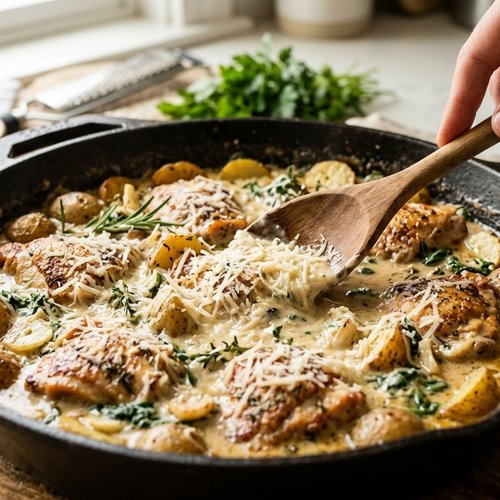
Customization Station: Let Everyone Build Their Own
One of my strongest professional insights is that picky eaters eat better when they feel in control of their choices. This skillet is perfect for that approach. Instead of plating everything together, set out small bowls with the components separated, and let each family member build their own bowl to their preferences. This simple shift from “here’s what you’re eating” to “here’s what you can choose” dramatically increases the likelihood that kids will try everything and clean their plates.
- Sauce ratio options – Some kids want extra sauce because they’re dipping or dunking. Others prefer less sauce so they can taste the chicken more clearly. Offer a ladle so everyone can choose their ideal amount.
- Cheese level – Put extra Parmesan in a small bowl so kids who love cheese can add more, and those who find it strong can take less. This gives them complete agency over their eating experience.
- Herb garnish choices – Offer fresh basil, parsley, or chives on the side. Kids who want to feel fancy can add their own garnish. Even picky eaters will try something they’ve personalized.
- Protein amount – Cut extra chicken into smaller pieces so younger kids can control portion size without the intimidation of a huge piece on their plate.
Scaling for Different Family Sizes
One of the beautiful things about this skillet meal is how easily it scales. If you’re cooking for just two people, you can cut everything in half and use a medium skillet instead of a large one—cooking time stays the same. For a family of four to five, use the recipe exactly as written. If you’re feeding six to eight people, double the recipe but use two large skillets rather than trying to crowd everything into one. Never double on the salt or herbs without tasting first—flavors concentrate differently in larger volumes.
For a family of two: 1 tablespoon oil, 1 large chicken breast halved, 1/2 pound potatoes, 1/2 cup cherry tomatoes, 1/2 cup spinach, 1/4 cup broth, 1/2 teaspoon cornstarch, 1/4 cup cream, 1/4 cup Parmesan, 1 tablespoon lemon juice, and proportional herbs.
For a family of six to eight: Double all ingredients listed in the main recipe, cook in two skillets simultaneously, and increase cooking time by only 2-3 minutes since you’re spreading ingredients across more surface area.
Can I Store One-Skillet Chicken Potato Dinner?
As a dietitian working with busy families, I always tell parents that successful meal planning includes smart storage. This skillet stores beautifully and reheats with minimal fuss—a huge advantage for weeknight sanity. Store leftover portions in an airtight container in the refrigerator for up to three days. The sauce maintains its silky texture, and the potatoes stay tender.
To reheat, place your portion in a small skillet over medium-low heat with a splash of broth or cream (about 1-2 tablespoons per serving) to restore moisture. Stir gently every minute or so for 5-7 minutes until heated through. Alternatively, you can microwave in 30-second intervals on 70% power, stirring between intervals, which prevents the cream sauce from breaking.
For lunchboxes, I recommend packing the skillet meal in an insulated container with an ice pack if eating within 4 hours of packing. The sauce keeps everything moist, and kids genuinely prefer this to sandwiches. Pack Parmesan in a separate small container so kids can add it at lunch if they prefer—it stays fresher that way.
Nutrition Information
Per serving (approximately 1.5 cups including sauce): 520 calories, 28 grams protein, 34 grams carbohydrate, 29 grams fat (14 grams saturated), 95 milligrams cholesterol, 680 milligrams sodium, 4 grams fiber, and 6 grams sugar. This recipe provides excellent protein for muscle development and growth, B vitamins from the chicken for energy metabolism, and iron from the spinach for oxygen transport in growing bodies. The carbohydrates from potatoes fuel their active brains and bodies, while the fat-soluble vitamins supported by the cream and cheese promote bone development and vision health.
According to USDA nutritional databases, one serving of this meal provides approximately 45% of a child’s daily protein needs, 22% of daily iron (especially bioavailable because of the vitamin C from tomatoes), and 35% of daily calcium from the cheese and cream. The combination of protein and complex carbohydrates creates sustained energy release, preventing the blood sugar spikes and crashes that lead to behavior changes and mid-afternoon fatigue.
Expert’s Nutritional Tip
As a registered dietitian, I want to highlight something that surprised many families I’ve worked with: the lemon juice in this recipe isn’t just for flavor. Citric acid increases the bioavailability of iron from the spinach, meaning your child’s body can actually absorb significantly more iron because of that simple squeeze of lemon. This is especially important for children ages 4-8, who are building iron stores for growth and cognitive development. Always add the lemon juice right before serving, and don’t skip it—it’s as nutritionally important as the spinach itself.
Make-Ahead Guide
Planning ahead transforms this from a weeknight stress into a weeknight victory. Here’s my professional make-ahead strategy: Up to 24 hours before cooking, you can halve your potatoes and tomatoes, chop your spinach, mince your garlic, and measure all your dry seasonings into a small bowl. Store potatoes in water in the refrigerator (prevents browning), and store vegetables in separate airtight containers. Pat them dry before cooking to ensure proper browning.
You can also prepare the sauce mixture ahead: whisk broth and cornstarch together, cover, and refrigerate. When you’re ready to cook on your actual dinner day, you simply brown the chicken and proceed. This cuts active cooking time from 35 minutes to approximately 25 minutes, which is the difference between stressful and manageable on a busy Wednesday.
Alternatively, prepare the entire skillet through step 3 (after adding spinach but before making the sauce), let it cool completely, cover, and refrigerate for up to 24 hours. When ready to cook, simply return to the stove, add your sauce mixture and chicken, and proceed with steps 5-6. This freezer-friendly approach is perfect for meal prep Sunday families.
Common Mistakes to Avoid
In my years working with families on weeknight cooking, I’ve noticed patterns in what derails this recipe. Avoiding these mistakes means your skillet turns out creamy and delicious every single time.
Skipping the chicken-drying step: Wet chicken won’t brown properly, and browning is where flavor comes from. Always pat chicken dry before it hits the hot oil. This single step makes the difference between a pale, steamed chicken dinner and a golden, flavorful one.
Moving the chicken too early: Resist the urge to poke and flip constantly. Let each side develop that gorgeous brown crust undisturbed for the full 3-4 minutes. Movement prevents browning and disrupts the Maillard reaction that creates depth of flavor.
Skipping the cornstarch slurry: Directly adding cream and broth to hot vegetables creates lumps and broken sauce. Always whisk cornstarch with broth first, creating a smooth slurry before adding to the pan. This simple step ensures a silky sauce every time.
Overcooking the potatoes during the initial sauté: When you add potatoes and tomatoes in step 2, just let them cook 1-2 minutes. Longer sautéing dries them out before they finish cooking in the sauce. The gentle simmering in step 5 finishes cooking them perfectly.
Seasonal Variations
While this recipe is wonderful year-round, seasonal variations keep it fresh in regular rotation. In spring, replace half the spinach with fresh peas and add fresh dill instead of basil for brightness. Summer offers peak cherry tomatoes, so don’t hesitate to use extra—you can add up to 1.5 cups. Add fresh basil instead of dried, and finish with a scatter of fresh mint. Fall and winter versions can include halved Brussels sprouts or thinly sliced zucchini, cooked the same way as potatoes. You can also swap out fresh herbs for 1/2 teaspoon fresh thyme, which tastes warm and wonderful during colder months.
A delicious spring variation includes 1/2 cup frozen peas added with the broth mixture, 2 tablespoons fresh dill instead of oregano and basil, and the zest of one lemon stirred in at the end. Summer variations embrace the peak tomato season—use 1.5 cups cherry tomatoes and finish with fresh basil and fresh mint. These small swaps keep the meal exciting while maintaining the core comfort that makes it perfect for picky eaters.
What to Serve Alongside for a Complete Family Meal
This skillet is substantial enough to be the main event, but simple sides make it feel like a complete, restaurant-quality meal. I always recommend sides that are familiar to your children and that require minimal additional kitchen work. A simple green salad with lemon vinaigrette pairs beautifully, or roasted vegetables if you have oven space. If you’re looking for a more involved side, my carrots and potatoes recipe complements this meal wonderfully, though you might skip the potatoes since they’re already in the skillet.
- Crusty bread or dinner rolls – Kids love having something to soak up the creamy sauce, and the bread makes them feel like they’re eating something “normal” alongside the main dish
- Simple spinach salad with vinaigrette – If kids haven’t eaten much spinach in the skillet, a small salad on the side offers familiar greens without pressure to finish it
- Steamed broccoli with garlic butter – The familiar vegetable and butter sauce feel kid-friendly, and the bright green color balances the cream-colored skillet
- Garlic green beans with olive oil – Another vegetable option that’s soft enough for young teeth and flavorful without being intimidating
Chicken Potato Skillet Recipe
Ingredients
- 1 pound little yellow or red potatoes, halved leave skins on for fiber and nutrients
- 1 teaspoon minced fresh garlic or 1/2 teaspoon garlic powder if your kids dislike texture
- 1/4 teaspoon dried basil adds depth without overpowering
- 1/4 teaspoon fresh ground black pepper
- 2 tablespoon vegetable oil for browning without smoking
- 1 teaspoon kosher salt divided between seasoning and sauce for better flavor distribution
- 2 large boneless skinless chicken breasts, halved lengthwise (or 4 small breasts
- 1/2 cup heavy cream full-fat, not half-and-half, for proper sauce consistency
- 1 cup fresh cherry tomatoes, halved choose ripe ones for natural sweetness
- 1/4 teaspoon dried oregano or 3/4 teaspoon fresh if available
- 1 cup fresh spinach, chopped baby spinach works beautifully and is less intimidating for kids
- 1 tablespoon cornstarch creates silky texture without lumps
- 2 tablespoon fresh lemon juice brightens the sauce and aids nutrient absorption
- 1/2 cup freshly grated Parmesan cheese (not the pre-shredded kind
- 1/2 cup low-sodium chicken broth lower sodium is important for children's developing kidneys
Instructions
Step 1: Season and Brown Your Chicken
- Start by patting your halved chicken breasts dry with paper towels. This might seem like a small step, but moisture on the surface prevents proper browning. Let your children help with this—it's a safe, tactile task. Sprinkle salt and pepper generously on both sides of each piece. Heat your oil in a large skillet over medium-high heat for about one minute. Before adding chicken, carefully hold your hand about 6 inches above the pan—you should feel clear heat radiating upward. This signals the oil is ready. Place chicken pieces in the hot skillet and resist the urge to move them for 3-4 minutes. Keep young children back from the stove during this browning phase—the oil will pop and splatter. After 3-4 minutes, flip each piece using tongs and brown the other side for another 3-4 minutes. You're looking for golden-brown exteriors that will seal in moisture during simmering. Transfer browned chicken to a clean plate.
Step 2: Build Your Flavor Base
- In the same skillet with the remaining oil and browned bits (called fond—this is liquid gold for flavor), add your halved potatoes, halved cherry tomatoes, and minced garlic. If your children helped prepare the tomatoes and potatoes earlier, remind them of their contribution now. Stir everything together and let it cook untouched for 1-2 minutes so the garlic releases its aromatics. The kitchen will smell absolutely incredible at this point—that's when you know the Maillard reaction is creating deep flavors. Now add the dried oregano and basil, stirring to distribute the herbs evenly. This is another perfect job for older kids—they can control the wooden spoon's gentle stirring motion.
Step 3: Introduce the Spinach
- Add your chopped fresh spinach to the skillet, stirring until it wilts into the potatoes and tomatoes. This happens in about 30 seconds. Younger children love watching the bright green spinach seem to "disappear" into the other ingredients—it's like magic, and it's a perfect time to talk about how the spinach is going to help them grow strong. The spinach flavor is completely masked at this point, which is exactly what we want for picky eaters.
Step 4: Create Your Silky Sauce
- In a small bowl, whisk together your chicken broth and cornstarch until completely smooth with no lumps. This step prevents your sauce from becoming grainy. Have your kids do the whisking—it builds their confidence in the kitchen. Pour this mixture into the skillet with the potatoes and spinach, stirring gently to combine everything. Now pour in the heavy cream and stir until you have a cohesive, silky liquid. The cornstarch will thicken the cream as everything cooks, creating that restaurant-quality sauce that makes kids ask for seconds.
Step 5: Bring It All Together
- Return your browned chicken pieces to the skillet, nestling them into the potato and sauce mixture so they're partially submerged. This ensures even cooking and maximum flavor absorption. Increase the heat to medium and bring everything to a gentle simmer—you'll see small bubbles breaking the surface. Once it reaches a simmer, reduce heat to medium-low, cover the skillet with a lid, and let everything cook undisturbed for 15-20 minutes. This is the perfect time to set the table together or prepare side dishes. The gentle heat will cook your potatoes until they're fork-tender and will bring your chicken to a safe internal temperature of 165 degrees Fahrenheit.
Step 6: The Final Touch
- After 15-20 minutes, carefully remove the lid (watch for the escaping steam—keep children back during this step). Test a potato with a fork; it should break apart easily. Check your chicken by inserting a meat thermometer into the thickest piece; it should read 165 degrees Fahrenheit. Once everything is cooked through, remove the skillet from heat and sprinkle the freshly grated Parmesan cheese over the entire dish, stirring gently to distribute it throughout the creamy sauce. The residual heat will melt the cheese perfectly, creating pockets of savory richness throughout. Add your fresh lemon juice and give one final gentle stir. Taste and adjust seasoning if needed.
FAQs
Can I use bone-in chicken breasts instead of boneless?
Absolutely! Bone-in chicken breasts are economical and add incredible flavor through the bones. You’ll need to increase cooking time slightly—simmer for 20-25 minutes instead of 15-20 until the meat is completely tender and reaches 165 degrees Fahrenheit at the thickest part. If you’d like to explore more bone-in chicken options, my bone-in chicken breast slow cooker recipe offers another delicious approach that many families use for meal prep.
My child refuses to eat anything with herbs. Can I skip the oregano and basil?
Yes, you can absolutely skip the dried herbs without compromising the dish. The garlic and cream sauce will still be delicious. However, I’d encourage you to try the herbs in very small amounts first—dried herbs are much milder than fresh, and many picky eaters surprise themselves when they realize these herbs actually taste like flavor enhancement, not “weird green stuff.” Start with just 1/8 teaspoon of each and let your child taste the difference. Often, picky eaters will accept them this way because they’re less visible and less intimidating.
What if my child refuses spinach entirely?
The spinach virtually disappears into the sauce, but if your child has developed an aversion to spinach, you can replace it with finely chopped zucchini (about 1 cup, squeezed dry), which adds moisture and nutrition without the distinctive spinach color. Alternatively, you can simply omit the spinach entirely—the dish still works beautifully, though you’ll lose the iron boost. Once your child becomes comfortable with the rest of the recipe, try reintroducing spinach in very small amounts, emphasizing that it “disappeared” into the sauce.
Can I make this dairy-free for allergies?
You can create a dairy-free version by replacing the heavy cream with full-fat coconut milk (same amount) and replacing Parmesan with nutritional yeast (1/4 cup). The flavor will be slightly different—less rich, more savory—but the texture remains smooth and the dish remains delicious. The cornstarch slurry works exactly the same way with this substitution.
How do I prevent the cream sauce from breaking when reheating?
Cream sauces break (separate and become grainy) when heated too rapidly or at too high a temperature. Always reheat on medium-low heat, add a splash of additional broth or cream to restore moisture, and stir frequently to ensure even heating. Never let the sauce boil; instead, aim for a gentle simmer. Microwave reheating on 70% power (rather than full power) also prevents the sauce from breaking because the lower power means gentler, more even heating.
More Family-Friendly Recipes
- my oven-baked chicken – A sweet-savory chicken option for kids who love honey’s natural sweetness
- Baked Mac N Cheese Recipe – The ultimate comfort food that pairs beautifully with this skillet as part of a weekend special dinner
- this cozy soup – Another one-pot option for busy families who want hands-off cooking
I started this journey in my mother’s kitchen because I watched her turn ordinary ingredients into extraordinary moments. She understood something essential: food is love, expressed through the simple act of feeding people you care about. This skillet meal is my way of passing that understanding to you. Every time you cook this with your children, every time a picky eater asks for seconds, every time you sit down together to a meal you created together—you’re building something far more valuable than nutrition. You’re creating food memories that shape how your children relate to eating, to cooking, and to the people they share meals with throughout their lives. That’s the real magic happening in your kitchen.
Happy Cooking!